

Knowledge sources
Knowledge sources are content you keep current. The Agent answers from them and cites nothing it cannot find in them.
Narrow each Agent to its job. An Agent on a product page answers best from that product’s own FAQ, not the whole catalog. The global guardrails also hold every Agent to facts the brand has published. Read Guardrails and fallback.
The Knowledge screen lists your knowledge bases with their source count and sync status. Only synced knowledge can be used in a reply.
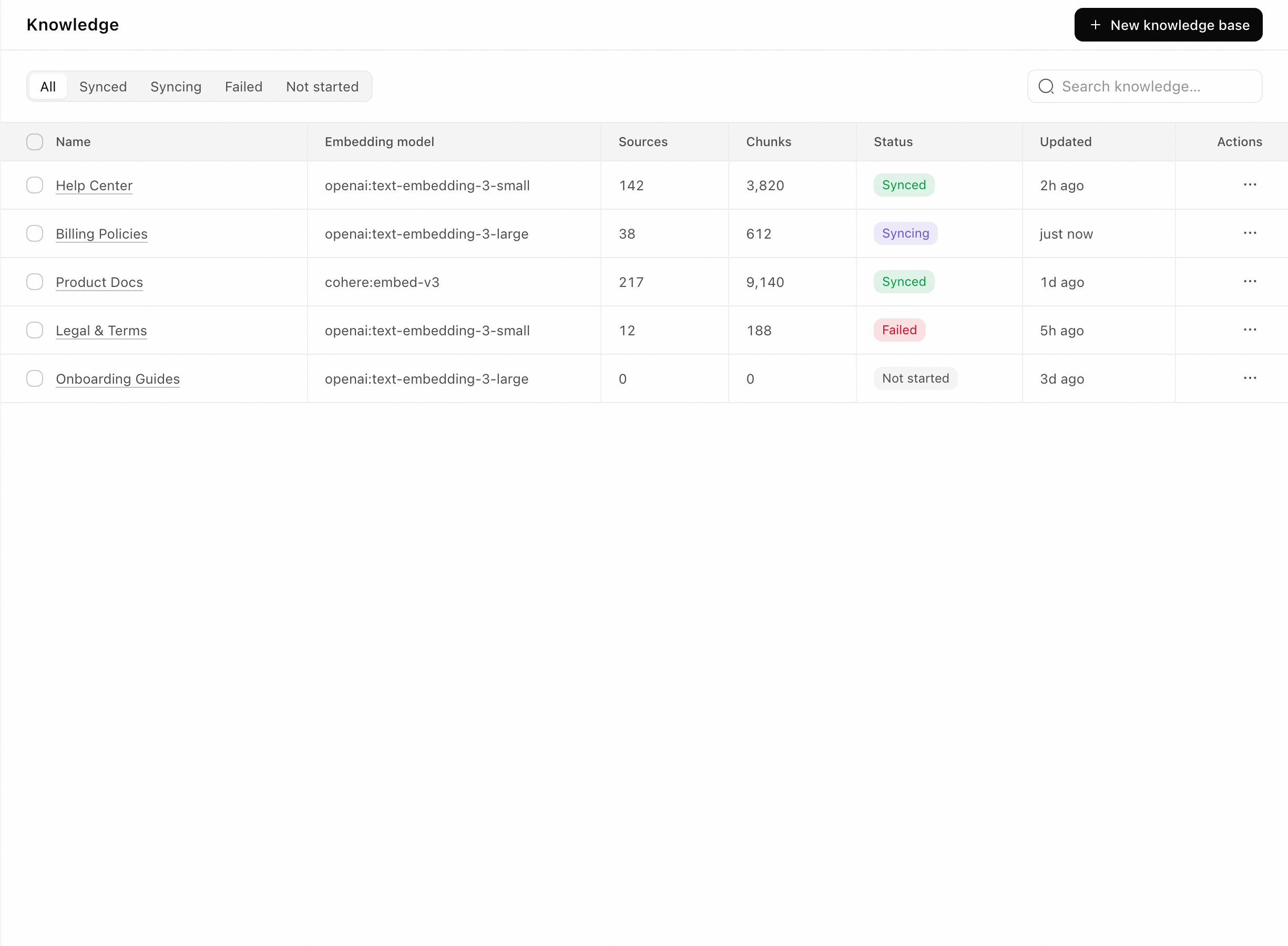
The Knowledge screen listing five knowledge bases
Customer context
Customer context is live information about the shopper, supplied by Crossword for every conversation.
Some context comes from Global settings and applies to every Agent. Customer context is what is true now. Customer memory is what the Agent has learned in the conversation and on earlier visits.
Read versus change
An Agent reads its knowledge sources and customer context. It changes none of them directly. Every change goes through an action, such as adding to cart or starting a return. Multi-step actions run as Workflows. Read Rich responses and actions.Sources for dynamic components
A dynamic component Workflow writes the words for AI blocks on your store pages. Its AI items read sources through# mentions in the instruction.
- Knowledge bases. The same sources your Agents answer from, including Visited pages.
- Tables. Rows of your own data, such as your synced products.
- Saved queries. The rows a saved query returns.